Publication, Part of Cancer registrations statistics, England
Cancer Registration Statistics, England, 2024
National statistics, Accredited official statistics

Cancer incidence by deprivation quintile
The Index of Multiple Deprivation (IMD) is the official measure of relative deprivation for small areas in England and is based on the postcode of residence at diagnosis. The 2025 IMD was grouped into quintiles, which were weighted so that the quintiles were equal in terms of the number of Lower-layer Super Output Areas (LSOAs).
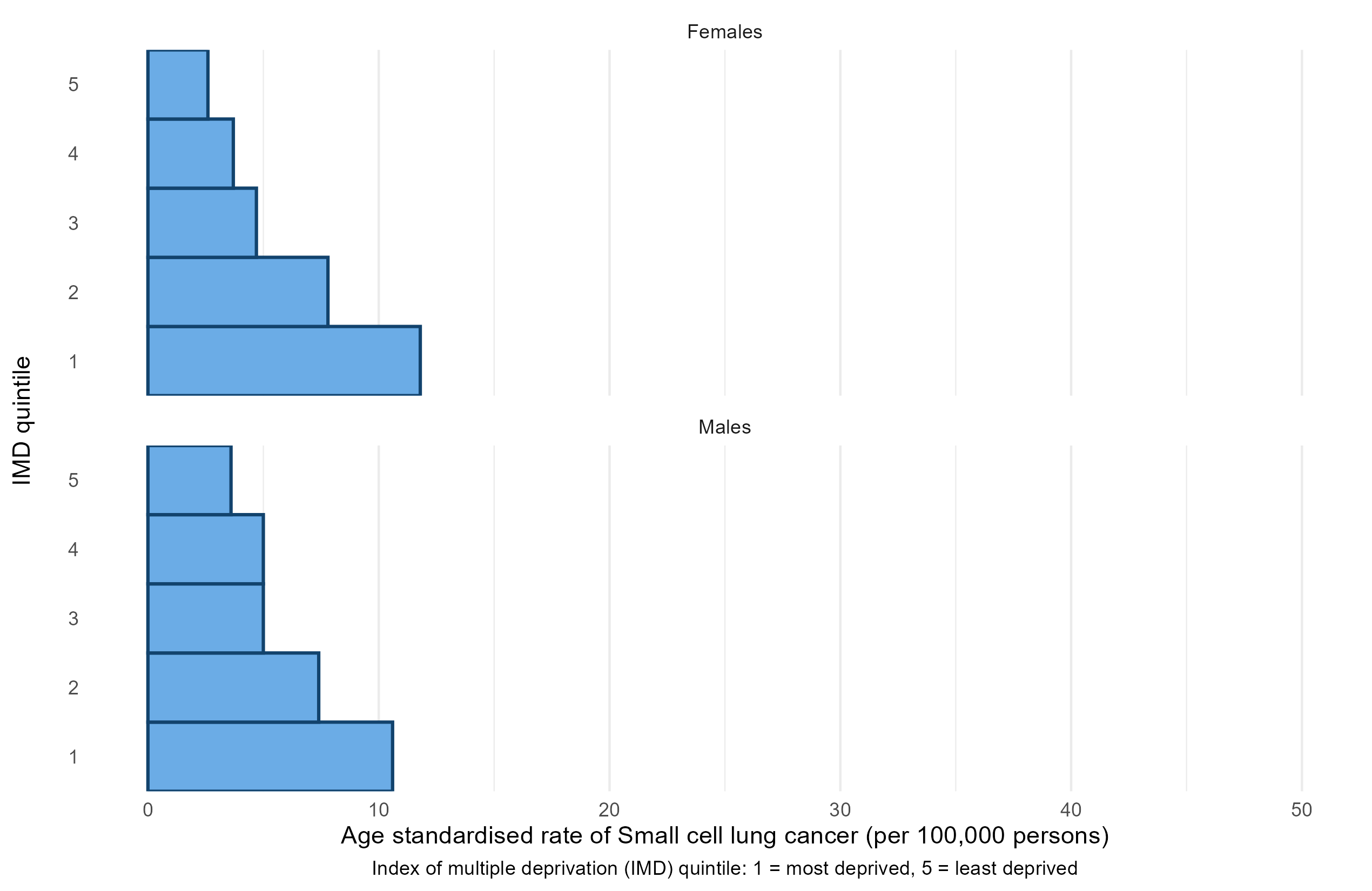
Estimates for most main and detailed cancer groups suggest that incidence is higher in the most deprived quintiles for both males and females. Small cell lung cancer has some of the biggest proportionate changes between quintiles for both males and females.
Figure 4 shows the age-standardised cancer incidence rate for Small cell lung cancer for males and females. The rates are about 4 times higher for females living in the most deprived areas (12 per 100,000) when compared with the least deprived areas (3 per 100,000). The rates were nearly 3 times as high for males living in the most deprived areas (11 per 100,000) when compared with the least deprived areas (4 per 100,000).
Figure 4: Age-standardised Small cell lung cancer incidence rates per 100,000 people by IMD quintile for males and females, England, 2024
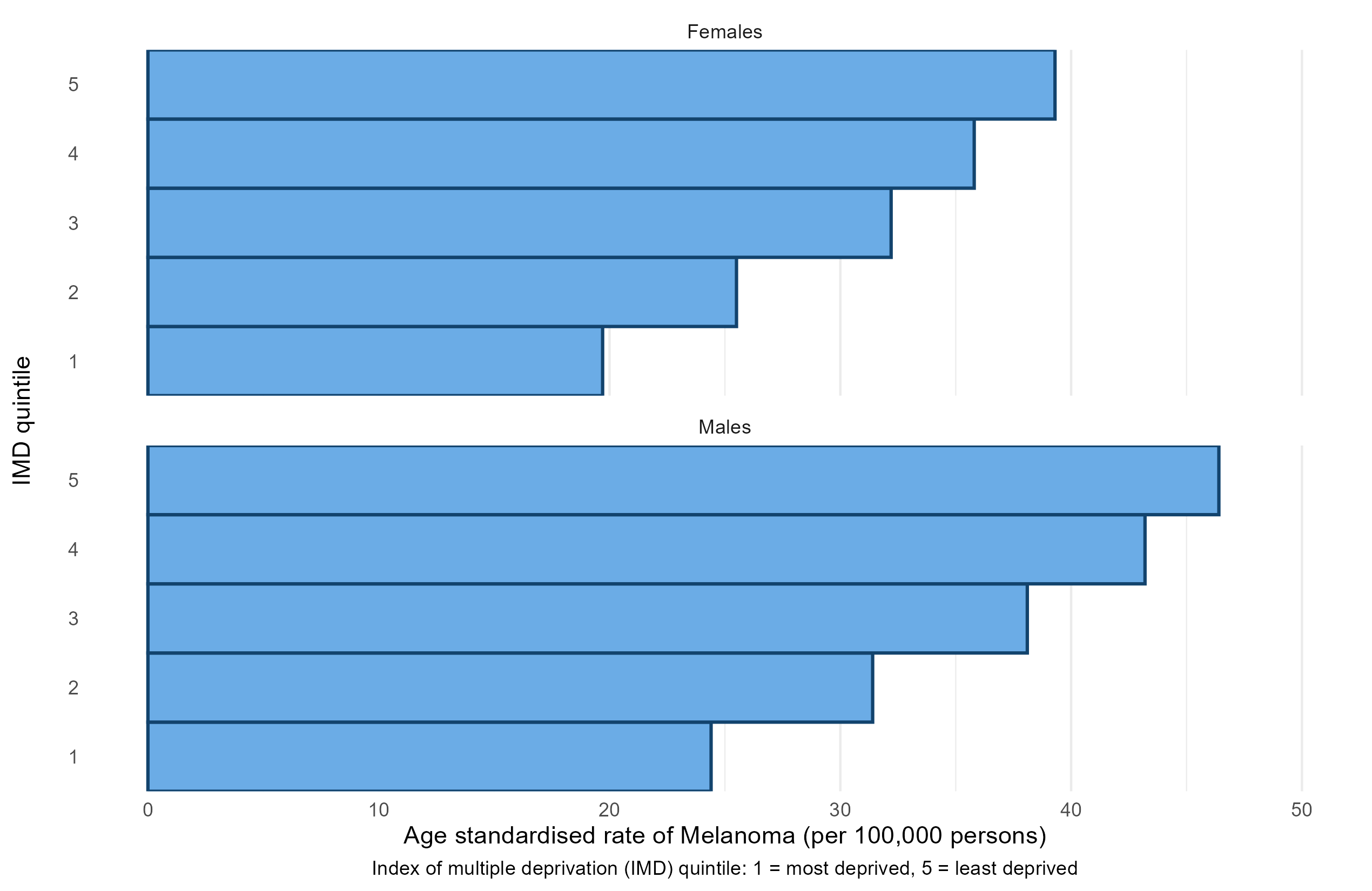
Although for most cancers the age-standardised cancer incidence rate is highest for people living in the most deprived areas, there are some cancers where the rate is highest for people living in the least deprived areas. For example, Prostate cancer, female Breast cancer, and Melanoma.
Figure 5 shows that for both males and females, the age-standardised cancer incidence rate for people with Melanoma living in the least deprived areas was twice as high as the rate for people living in the most deprived areas. For males, the rate was 24 per 100,000 people living in the most deprived areas and 46 per 100,000 people living in the least deprived areas. For females, the rate was 20 per 100,000 people living in the most deprived areas and 39 per 100,000 people living in the least deprived areas.
Figure 5: Age-standardised Melanoma cancer incidence rates per 100,000 people by IMD quintile for males and females, England, 2024
In certain cancer groupings there is no discernible relationship with IMD. For example, although the rates of diagnosis differ between males and females, the estimates of Diffuse large B-cell lymphoma (DLBCL) and other high grade mature B-cell neoplasms by quintile for each gender are similar. Figure 6 presents the age-standardised cancer incidence rates in 2024 for both males and females diagnosed with DLBCL and other high grade mature B-cell neoplasms, one of the most common forms of blood cancer.
Figure 6: Age-standardised Diffuse large B-cell lymphoma and other high grade mature B-cell neoplasms cancer incidence rates per 100,000 people by IMD quintile for males and females, England, 2024
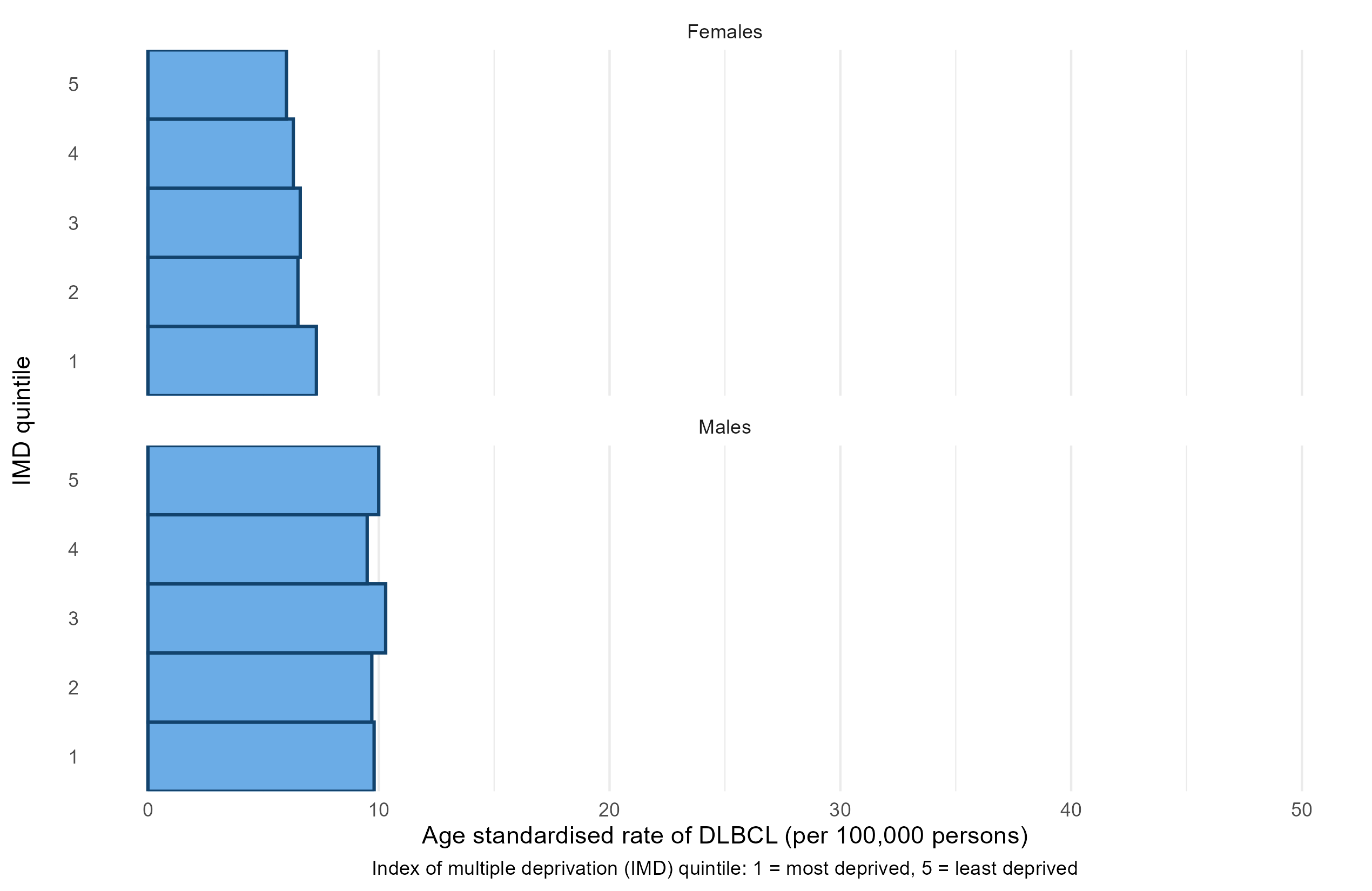
‘DLBCL’ = Diffuse large B-cell lymphoma and other high grade mature B-cell neoplasms
Other detailed groups showing similar patterns to DLCBL include Acute lymphoblastic leukaemia (ALL), Myeloma, and Non-benign endocrine cancers of the Brain and central nervous system.
Last edited: 5 November 2026 9:31 am