Single Point of Access (SPoA) services in e-RS
The NHS e-Referral Service (e-RS) will introduce functionality to support elective Single Points of Access (SPoAs). SPoA is a model in which all Advice and Guidance (A&G) requests and elective referrals are directed to a single digital entry point at specialty or sub-specialty level within secondary care.
From October 2026, the NHS e-Referral Service (e-RS) will introduce functionality to support elective Single Points of Access (SPoAs).
Enhancements will be delivered incrementally. The initial phase will allow e-RS Service Definers to set specific e-RS services as SPoA services and a new ‘Single point of access’ label will help referrers and provider users identify SPoA services from all other service types during service searching and when onward referring. The October release also includes a technical update to align e-RS Pathway start date with RTT Policy requirements and capture the referrer’s advice intention.
Further enhancements, including SPoA labelling on additional screens and conversation functionality for referrals into a SPoA are planned to be delivered after the October release. Further details will be added to this page later.
About Single Point of Access (SPoA)
Elective SPoA is a model in which all Advice and Guidance (A&G) requests and elective referrals, except those for urgent suspected cancer, are directed to a single digital entry point at specialty or sub-specialty level within secondary care.
A specialist clinical review will take place within e-RS, or within an integrated clinical system, to determine the most clinically appropriate next step or outcome for the patient. This may include advice, straight-to-test diagnostics, onward referral, another management pathway, or communication with the patient and referrer in line with local guidance.
Change to the calculation of the e-RS Pathway Start Date
The calculation of the e-RS pathway start date will be updated, to align with existing RTT rules. For A&G requests converted directly into referrals, by the service provider, e-RS will use the original request date as the e-RS pathway start date rather than the conversion date. The change will be implemented in release 16.9, impacting requests raised after this update.
Further information is available on the e-RS pathways start date page.
Single Point of Access (SPoA) services in e-RS
Following release 16.9 on Friday 9 October 2026 (subject to final testing) e-RS Service Definers will set specific SPoA services via ‘View all services’ and ‘Select supported request types’ in the Directory of Services (DoS).
The supported request types section will include a new ‘Is this a single point of access service?’ question – choosing ‘Yes’ will define the service as a SPoA service.
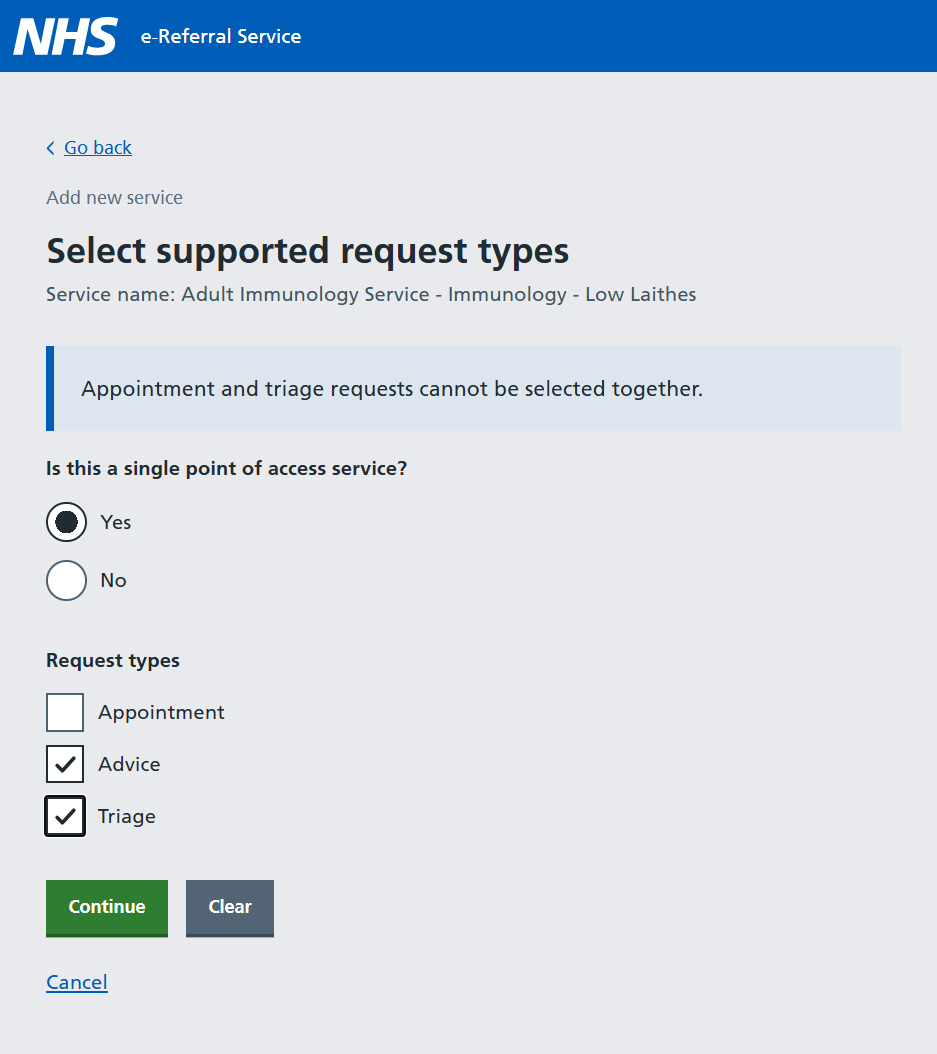
Each SPoA service can be configured using one of three request-type combinations. Further information including considerations and benefits for each request type combination is available on the NHS e-RS Futures page (login required).
In summary, the supported combinations for setting up SPoAs are:
- using both ‘Advice’ and ‘Triage’ Request types— this is the recommended option
- ‘advice’ only; or
- ‘triage’ only
Providers should select the SPoA model that best supports each specialty’s clinical and operational processes. The combined model is recommended; advice-only or triage-only models should be used only where this has been agreed locally with GPs and commissioners.
SPoA services cannot support the ‘Appointment’ request type. If ‘Appointment’ is selected for a service identified as a SPoA, an error message will be displayed, and it won’t be possible to continue if this option is selected.
Restricting services behind SPoA Services
Service Definers must ensure all other services that share the same specialty and clinic type as any SPoA services are restricted so that initial referrers see only one SPoA when creating a request. Restricted services can continue to support triage or appointment requests, including Clinical Assessment Services.
Service restrictions are managed through ‘View all services’ in the DoS. Providers can enable restrictions for other services by using the options:
Authorised services: use the Service ID of the relevant SPoA to permit onward referral to the service being restricted.
Authorised organisations: use the provider ODS code to allow any SPoA service in that organisation to refer to other services across specialties.
Using ‘Authorised organisations’ when restricting services will provide the greatest flexibility as any service including new SPoA services within the organisation will be able to onward refer or redirect to the restricted service across different specialties, if required.
If applying restrictions to existing triage or appointment services, providers must ensure UBRNs referred into these services prior to SPoA go-live are managed appropriately.
Please visit the e-RS Restricting Services page for more information.
The introduction of SPoAs will have the following impact on referrer processes:
- a new ‘Single point of access’ label will be introduced for SPoAs
- when requesting advice, a new ‘Advice Intention’ screen will be presented
Sending a Referral Request into a SPoA
Referrers will continue to initiate a new e-RS referral in the usual way. When searching for appropriate referral services, SPoAs will display the new ‘Single point of access’ label next to the service name.
In the referral workflow, users may select a single SPoA service to refer to or include a SPoA in a shortlist of multiple services.
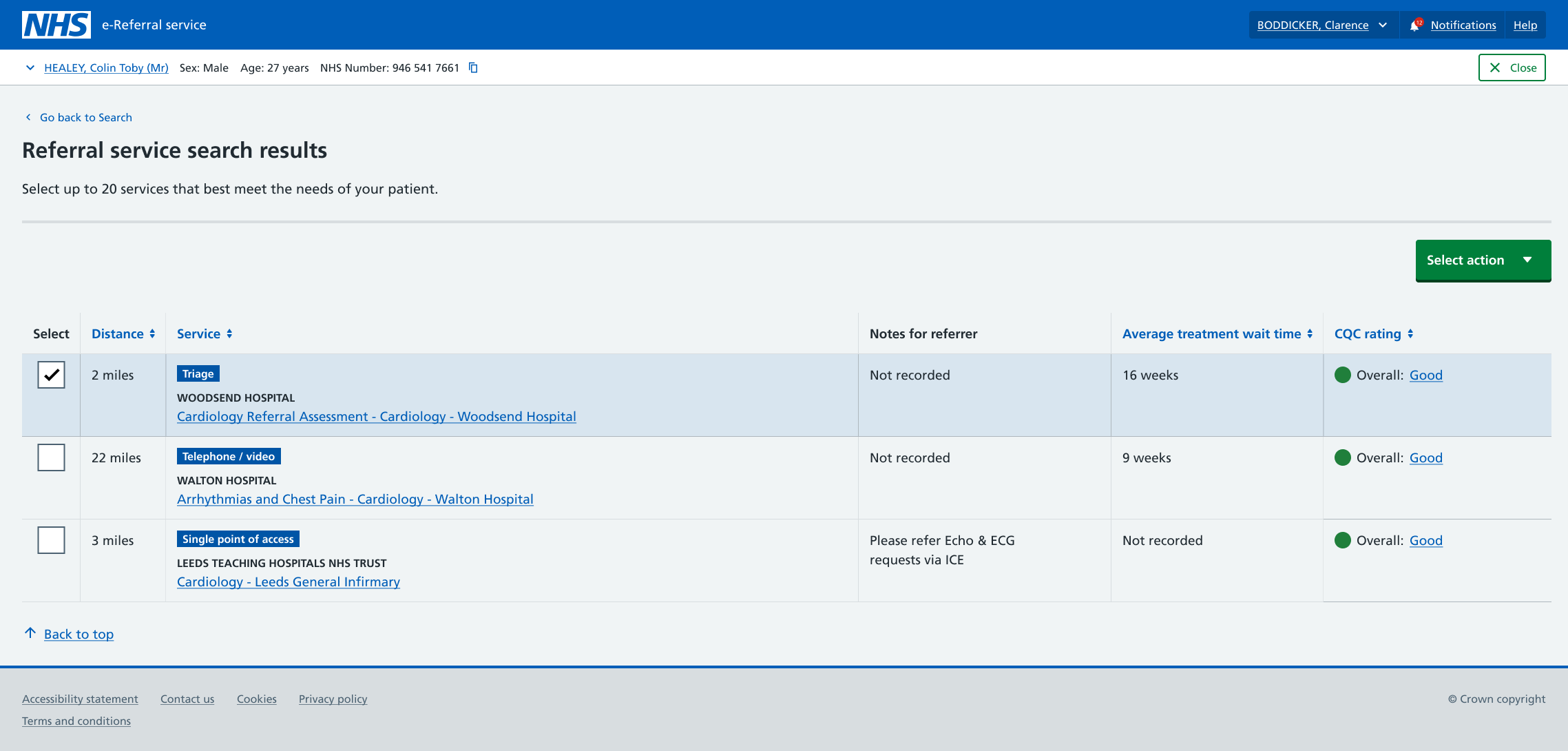
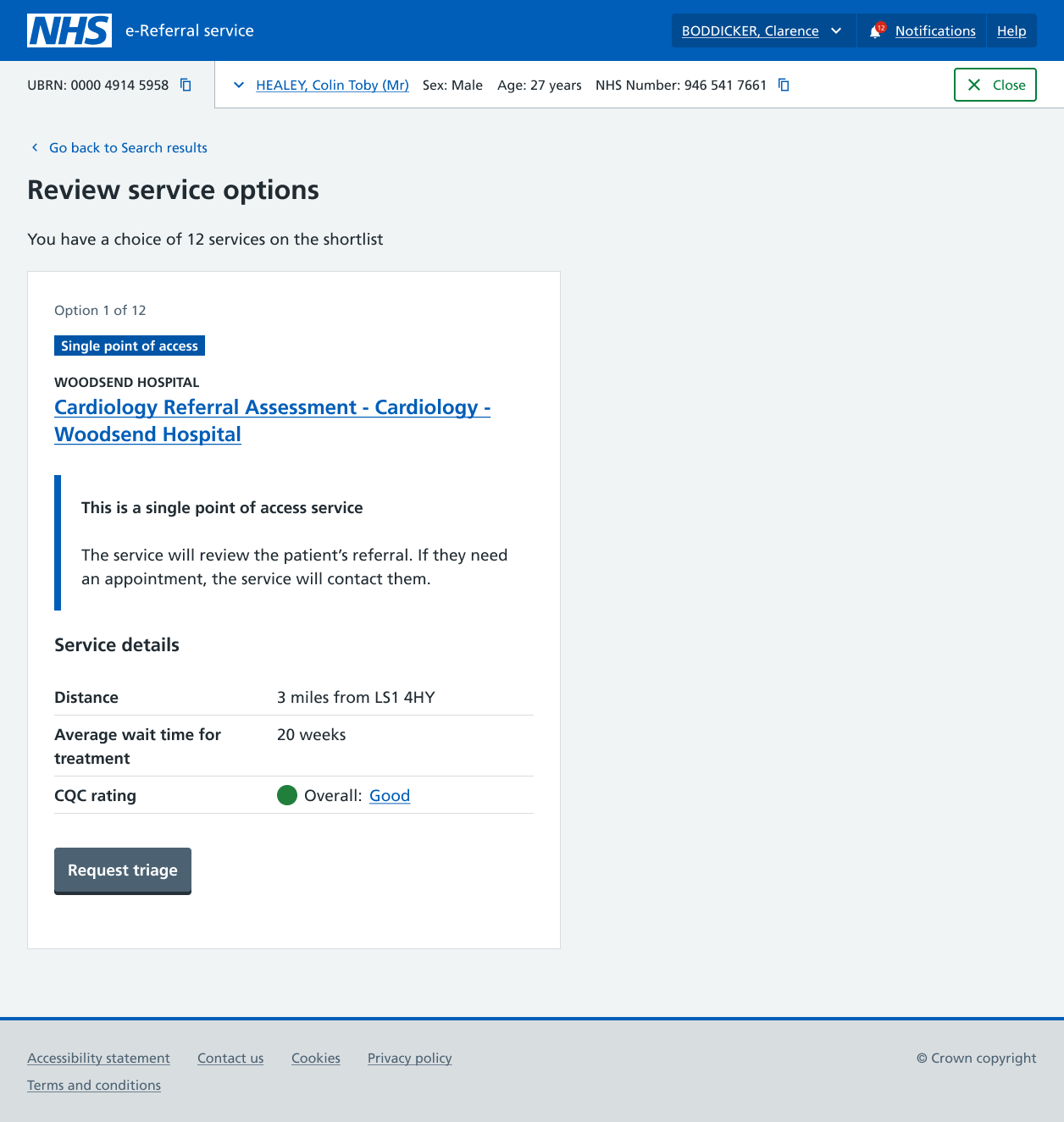
The Single point of access label is also displayed on the Review service Options page when a single SPoA is selected.
The final confirmation page will also be updated for referrals submitted successfully to be triaged by the selected provider.
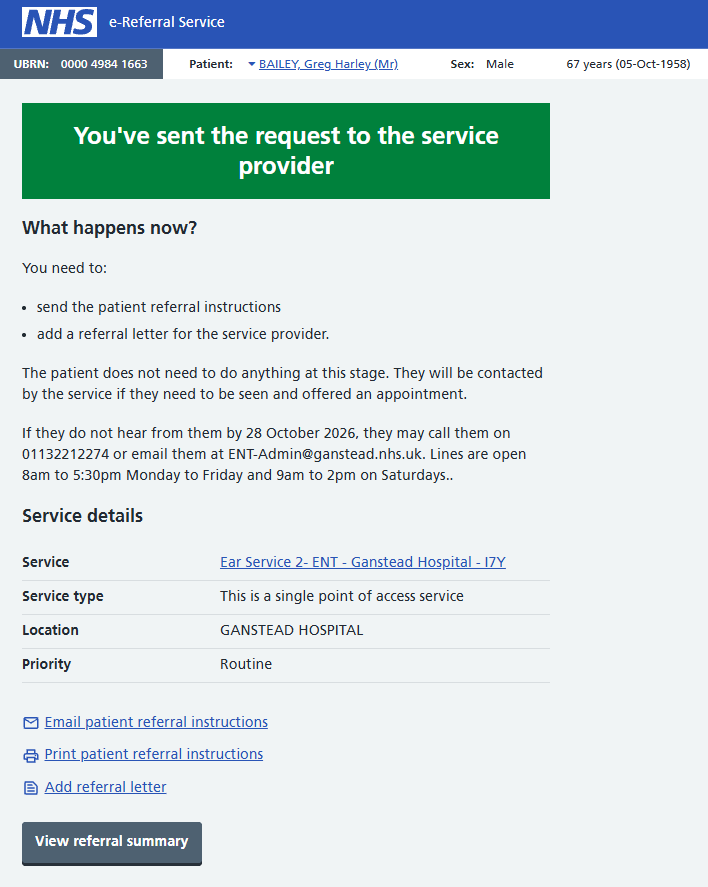
‘Triage’ will be removed from the confirmation message so that the wording applies appropriately to any referral request, including referral requests into a SPoA service.
No changes have been made to patient communications.
If a SPoA service is included in a referral shortlist, the ‘Single point of access’ label will appear alongside the SPoA service in the shortlist.
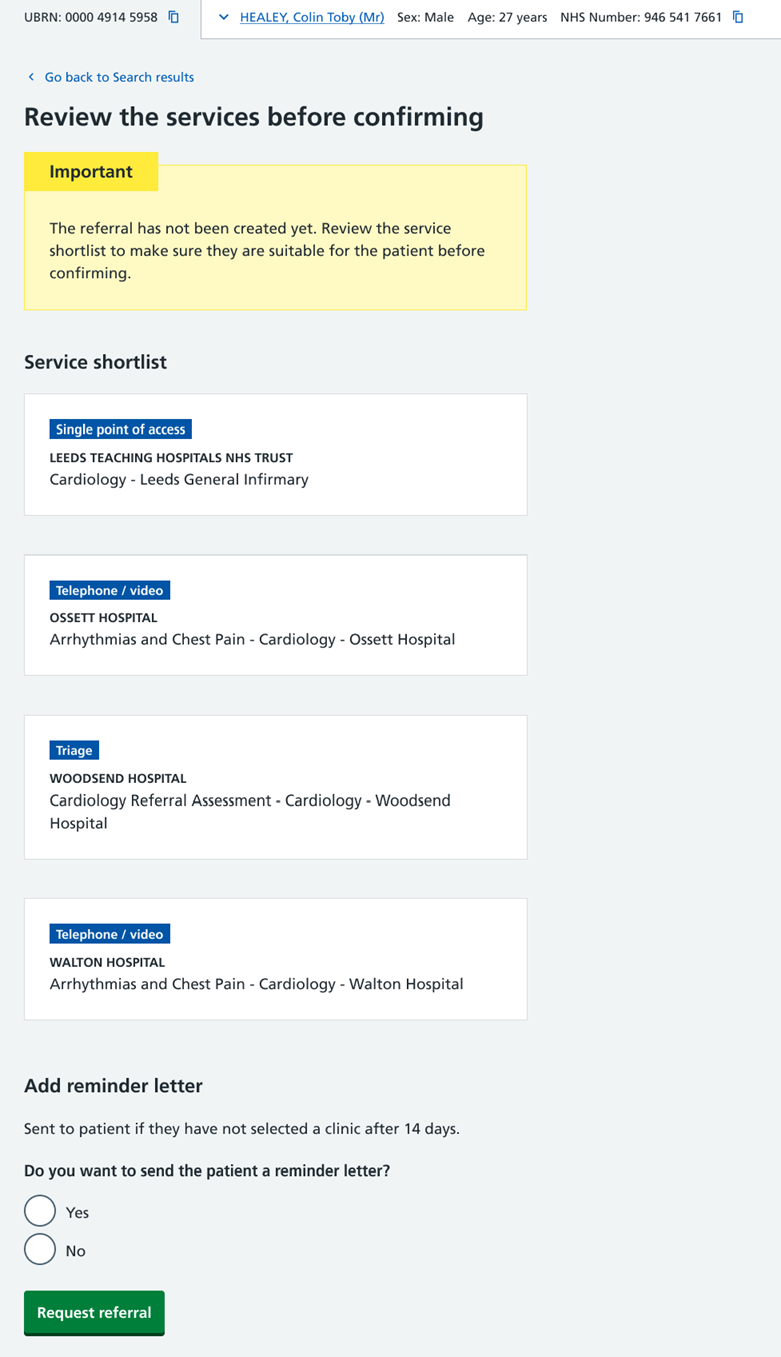
Sending an Advice Request into a SPoA
Referrers will continue to initiate a new e-RS Advice and Guidance (A&G) request in the usual way. When searching for appropriate A&G services, SPoAs will display the new ‘Single point of access’ label next to the service name.
In addition, for all new advice requests referrers will see a new advice intention screen before the service search screen and will be asked to record the reason for seeking advice.
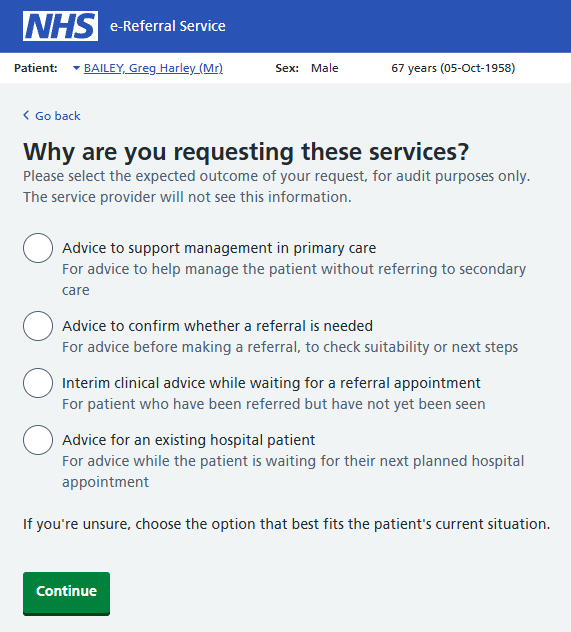
The selected outcome chosen on this screen will be used in reporting to support a clearer understanding of the different types of Advice and their impact on elective activity.
The selected option will not be presented to the clinician responding to the advice request.
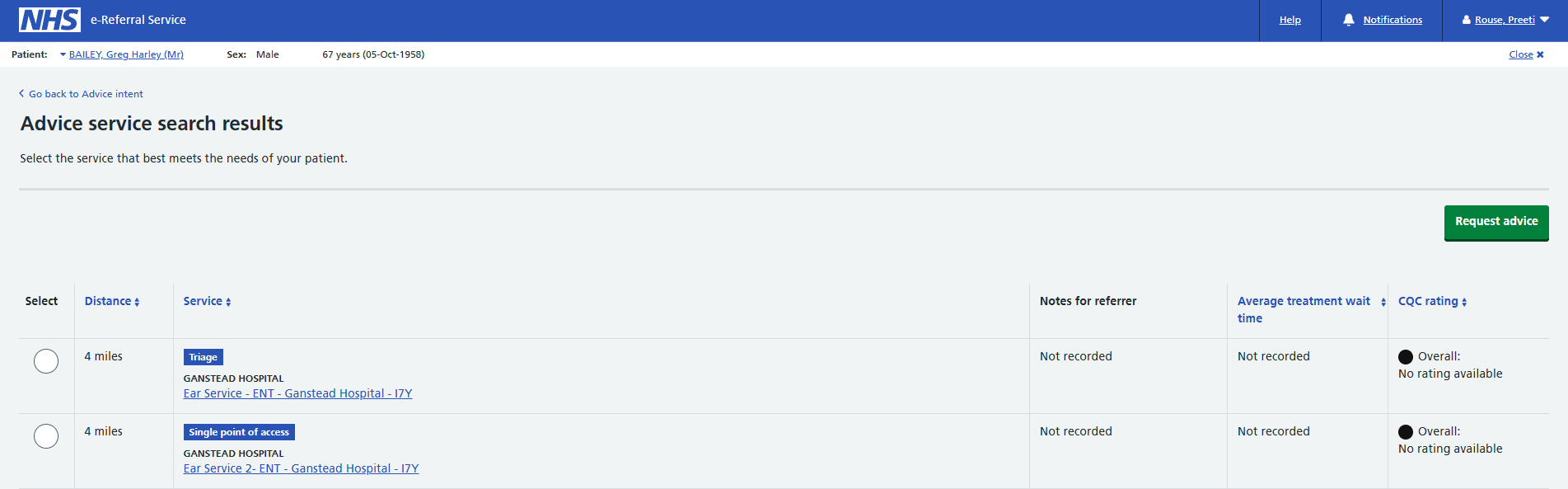
From the Advice service search results screen users can select an appropriate SPoA or other service to seek advice from as appropriate.
Service Provider screens to support onward referrals will also be updated to help identify Single Points of Access (SPoA) services.
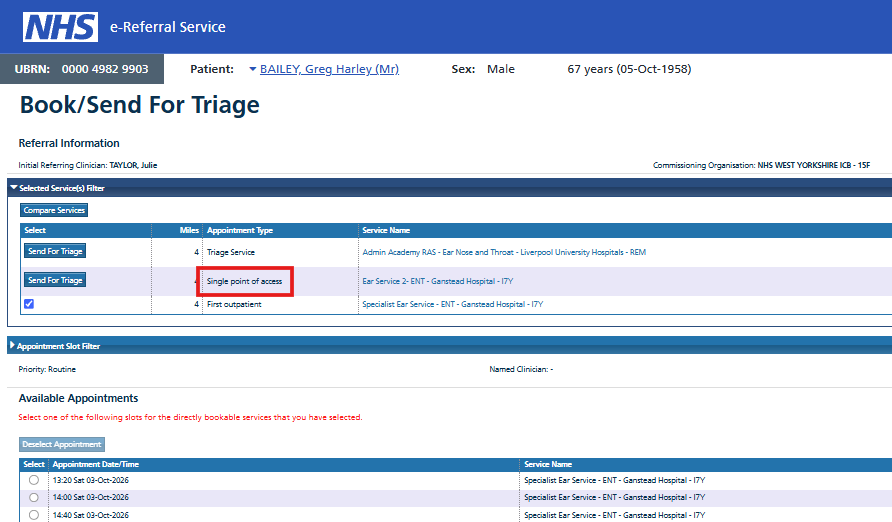
When onward referring, SPoA services will display ‘Single point of access’ in the Appointment Type column.
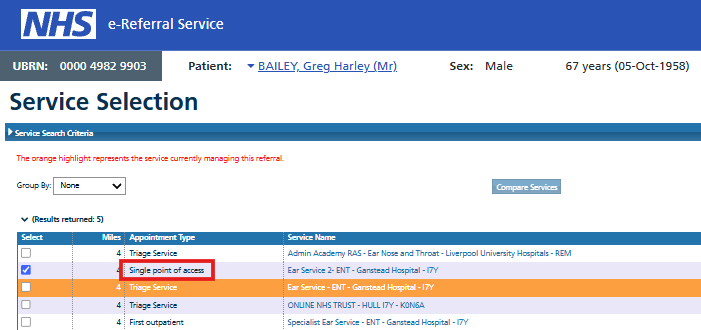
This label will remain visible in the Appointment type column when one or more services are selected for ‘Book/Send for Triage’.
Further information
Guidance for implementing e-RS SPoA services should be reviewed alongside the FutureNHS Elective SPoA Technical Guidance for 2026/27 (login required), relevant local standards and supporting e-RS guidance on defining and maintaining Directory of Services entries, RAS worklist management, Advice and Guidance worklist management and restricted services.
Organisations should use this guidance to support local planning and implementation, ensuring that service configuration, clinical and operational processes, staff training, governance arrangements and communications are agreed before go-live. As SPoA functionality will continue to develop after the October 2026 release, users should check the latest national and local guidance for subsequent updates.
Last edited: 5 October 2026 4:07 pm